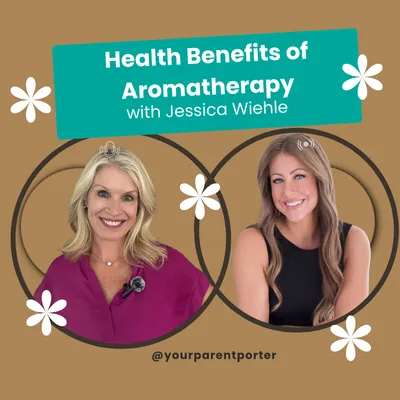
How Aromatherapy and Air Quality Affect Older Adults
If you’ve ever walked into your parents’ or grandparents’ home and thought,
“Something about this air doesn’t feel right,”
you’re not imagining it.
As our parents age, what they’re breathing every single day can either support their brain, sleep, and mood… or quietly work against them.
In a recent episode of My Parents Lied to Me, I sat down with my friend Jessica Wiehle, a clinical aromatherapist and founder of AromaWell, to talk about how aromatherapy and air quality affect older adults, especially those dealing with dementia, anxiety, pain, or just the “normal” challenges of aging.
This conversation hit close to home for me. When my mom’s health was declining, I tried to introduce her to essential oils and more natural options. She shrugged and said, “I can’t smell, so it won’t work for me.” She never got the chance to fully experience what I now know could have made her more comfortable.
So let’s talk about what I wish I’d known sooner and what you can start paying attention to in your parents’ home right now.
Aromatherapy: More Than “Nice Smells”
Most of us first meet essential oils through cute little recipe books and diffuser blends for headaches or tummy aches. That’s where I started, too. But Jessica’s work is on a completely different level.
She’s trained in the clinical applications of essential oils meaning she works with real data and outcomes in senior living, dementia care, and hospice communities.
Here’s what surprised me:
Aromatherapy isn’t just “spa vibes.”
It can be a non-pharmacological intervention for:
Sleep problems
Anxiety and agitation
Mood and depression
Digestive issues
Certain types of pain
Senior living communities began reaching out to her years ago because they were under pressure (and now, in some cases, regulation) to offer alternatives to simply adding more medications—especially for residents with dementia or high anxiety. And aromatherapy turned out to be a perfect fit.
How Smell Talks Directly to the Brain
Here’s the part that really blew my mind and might help you see aromatherapy differently.
When you inhale an essential oil:
The aroma goes straight into your olfactory system (your sense of smell pathway).
Your olfactory nerve sits right behind your nose—anything you smell enters your body and talks directly to your brain.
Essential oils contain naturally occurring chemicals (for example, lavender may have 40+ different natural compounds), and those can trigger brain chemistry like:
Serotonin
Dopamine
Relaxation responses
This is why certain oils can help with mood, anxiety, cognition, and sleep.
And here’s the kicker:
Even if someone “can’t smell,” aromatherapy can still work.
Those olfactory nerves can still be stimulated, and in some cases, regular exposure to real plant aromas can even help bring some sense of smell back—like waking up a weak muscle with gentle exercise.
A Hospice Story That Stuck With Me
Jessica shared one story I can’t stop thinking about.
A hospice community used her aromatherapy program with a woman who:
Couldn’t sleep, even on medication
Was nearing the end of her life
Also had a reduced sense of smell
They decided to try aromatherapy anyway.
With consistent use, they were able to wean her off her sleep medications, and she finally began sleeping naturally in her final weeks. She even told staff: “I’m having dreams again.”
For the family, that meant she was more present and connected not heavily sedated and unreachable. As someone who watched my own mom’s last chapter through a fog of medications, that story hit hard.
Synthetic Fragrances: The “Nice Smell” That Isn’t So Nice
Now for the uncomfortable part.
You know those plug-ins, sprays, candles, and heavily scented laundry detergents that “freshen” up a space?
Jessica was pretty blunt:
One of the most proactive things you can do for your brain is to get rid of synthetic fragrance especially things like plug-ins, aerosol sprays, and heavily perfumed products.
Why?
Because in the U.S., the word “fragrance” can legally hide thousands of chemicals that never have to be disclosed on the label. Many of them:
Are not allowed in the EU due to toxicity
Are neurotoxic (hard on the brain)
Disrupt hormones and reproductive health
Can be especially harmful for vulnerable people:
Older adults
People already on multiple medications
Those with dementia or chronic illness
Layer that on top of polypharmacy (when an older adult is on 10–20 medications) and you’ve essentially got a chemical cocktail interacting in their body and brain. So yes, that Glade plug-in or “lavender” spray might smell comforting—but it may also be quietly contributing to brain fog, agitation, fatigue, and inflammation.
A simple rule of thumb:
Turn the bottle around.
If it says “fragrance” or “parfum”, that’s a red flag.
If it clearly says “100% pure essential oil” and lists the plant, that’s what you want.
Mold, Musty Basements & Mysterious Aches
We also talked about another sneaky culprit in older homes: mold.
I shared how my parents’ house in Michigan always had that “musty” smell. It’s damp, it’s old, and we all just shrugged it off. Only later, while cleaning it out, did I find black mold. At the same time, my dad used to complain about arthritis and not feeling well. And when I stayed there, my fingers hurt too—I just blamed it on “dad energy” and emotions.
Over the past few years, Jessica has dealt with chronic mold exposure herself three different moldy places in three years and it triggered major health issues, including arthritis in her hands.
Some key points she shared:
Mold is much more common than most people realize possibly in 60–80% of buildings.
Even in dry places like Arizona, a tiny AC or HVAC leak can create mold behind walls or in ducts.
Mold can actually destroy the olfactory nerve, which may be one reason some older adults “can’t smell” anymore.
You can’t just “cover it up” with scent you have to find and remediate the source.
Testing matters:
Cheap air samples aren’t enough.
You want proper testing that looks at dust, surfaces, and potentially the HVAC system.
Can aromatherapy fix mold?
No it can’t replace remediation.
But the right essential oils, properly diffused, can help reduce microbial counts in the air: fungi, bacteria, and viruses. Some mold remediation companies even use essential-oil-based products in HVAC systems after cleaning to support air quality.
For your parents’ home, the sequence is:
Identify and address mold or moisture problems.
Eliminate synthetic fragrances that add more toxins to the air.
Use clinical-grade essential oils to help support cleaner, healthier air.
Better Sleep = Better Brain
If there’s one place Jessica would start in any home especially for aging adults, it’s sleep.
Poor sleep doesn’t just make you tired. It affects:
Memory and cognition
Immune function
Heart health
Mood and stress
Overall resilience
Jessica referenced a study where older adults who diffused essential oils overnight, consistently, for several months saw a dramatic improvement in memory and cognition—over 200%.
Her company created a Sleep Well program:
A targeted essential oil blend designed for deep, restorative sleep
A small device that can be set on a timer in a parent’s bedroom so they don’t have to fuss with anything
Families report that parents:
Sleep better
Wake up more refreshed
Sometimes even reduce sleep medications (with their doctor’s guidance)
If you’re wondering where to begin with aromatherapy for your parents, start in the bedroom.
How Many Diffusers Do You Really Need?
Good news: you don’t have to turn your parents’ house into an oil laboratory.
It depends on their goals:
If you’re mainly addressing sleep:
One simple device in the bedroom is enough to start.
If you want to support overall mood, cognition, and air quality:
You can place devices strategically in main living areas.
Or, in some homes, essential oils can even be introduced through the HVAC system to reach the whole house.
If you’re using a basic water diffuser:
Tap water is okay, but filtered is better for the machine’s longevity.
The biggest rule: don’t let water sit. Stagnant water = microbe growth = not what we want in the air.
Where Your Parent Porter Comes In
Here’s how this all ties back to what I do with Your Parent Porter and our SAFE Home & Wellness Check-Ins:
When I walk into an older adult’s home, I’m not just looking at grab bars and rugs (though those matter, too). I’m paying attention to:
What does the air feel like?
Do I smell mustiness (potential mold)?
Do I smell chemical fragrance everywhere (plug-ins, sprays, detergents)?
Is this environment helping their brain and body—or quietly draining them?
From there, I can help families:
Identify red flags like mold or excessive synthetic fragrance
Recommend proper testing or referrals when needed
Introduce more natural, supportive options like clinical-grade aromatherapy through trusted pros like Jessica
Because aging in place isn’t just about staying in a house.
It’s about staying in a healthy, supportive environment; physically, emotionally, and neurologically.
Your Next Three Steps
If you’re an adult child worried about your parents’ home:
Do the scent audit.
Walk through their home.
Count plug-ins, sprays, scented candles, and heavy detergents.
Start gently replacing them with fragrance-free or pure essential-oil-based alternatives.
Pay attention to “musty” or damp smells.
Especially in basements, bathrooms, around AC units, and near windows.
If you suspect mold, get proper testing—don’t just cover it up.
Support their sleep first.
Experiment with a nighttime essential oil program (with real, pure oils).
Combine it with other good sleep hygiene: darker room, calmer evenings, fewer screens.
If you’d like help assessing your parents’ home and wellness environment things they may not see or feel for themselves that’s exactly why I created Your Parent Porter.
We can’t go back and change what our parents didn’t know.
But we can use what we know now to help them live more comfortably, clearly, and peacefully in the homes they love.
Here is the full interview with Jessica on YouTube @yourparentporter
