Reverse Mortgage Myths: What Families Should Know
If you’ve ever asked your parents how things are going at home and heard, “We’re fine, everything’s fine,” you already know: that’s not always the truth.
Our parents grew up with a fierce sense of independence. They’re proud of the home they’ve paid for, the life they’ve built, and the routines they’ve kept for 20, 30, even 40 years. But as the years go on, the same home that once kept them safe and comfortable can quietly become a risk.
Loose rugs. Hard-to-step-over bathtubs. Dim lighting. Narrow hallways and cluttered paths. Outdated bathrooms and kitchens that weren’t designed with 70-, 80-, or 90-year-old bodies in mind.
That’s exactly why I created Your Parent Porter and my podcast, “My Parents Lied to Me.” I wanted a place to talk honestly about what aging really looks like for our parents and for us as midlife adult children trying to keep up, often from a distance.
One of the biggest topics that keeps coming up? Money. Specifically:
How do Mom and Dad afford to stay in their home safely?
How do we avoid the “fall–hospital–rehab–can’t-go-home” nightmare scenario?
Is there a way to use the house itself to support safer, longer living at home?
That’s where reverse mortgages come in and it’s probably not what you’ve been told.
Reverse Mortgages: Not the Villain You Were Warned About
When I first got into real estate, I was told, “Reverse mortgages are bad. Don’t touch them. Don’t let your clients touch them.”
So for years, I didn’t.
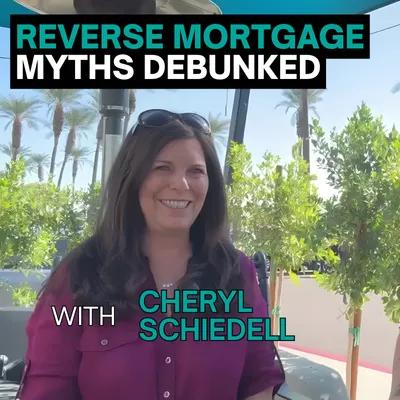
Then I met Cheryl Scheidell of Barrett Financial, a reverse mortgage specialist who has been in the mortgage world since 2002 and has spent the last decade almost exclusively focused on reverse mortgages. She didn’t pitch me. She educated me. She walked families through the numbers. She even helped her own mom get a reverse mortgage because she believes in the product that much.
Here’s the basic truth:
Reverse mortgages are generally available to homeowners 62 and older (with some products starting at 55).
You still own your home.
You are responsible for taxes, insurance, and HOA, just like any other mortgage.
Instead of you paying the bank each month, your home’s equity pays you (or pays off your existing mortgage) so you can free up cash flow.
Cheryl calls it what it really is:
“You’re living in your piggy bank. This is your castle let’s tap into that piggy bank.”
This isn’t about “losing the house.” It’s about using the asset you’ve been faithfully paying into for decades to support your golden years, not just your heirs’ inheritance.
How Reverse Mortgages Help People Age in Place
For many of the independent older adults I meet in Your Parent Porter home & wellness check-ins, the story is the same:
The house is mostly or fully paid off.
The monthly income is fixed and tight.
The home desperately needs updates for safety, accessibility, and comfort.
Think:
Converting a tub to a walk-in shower
Adding grab bars, better lighting, and non-slip flooring
Widening doorways or reworking layouts for walkers or wheelchairs
Replacing old roofs or failing HVAC systems
Installing better storage and safer access to cabinets and drawers
All of these things cost money. And most parents will quietly go without rather than “burden” their kids or dip into what they imagine is “your inheritance.”
A reverse mortgage can:
Pay off an existing mortgage, eliminating that monthly payment.
Free up cash flow for healthcare, in-home help, or safety renovations.
Provide a line of credit that can be tapped for emergencies, repairs, or lifestyle upgrades.
Help fund memorable things like trips with grandkids, not just medical bills.
In other words: it can turn a house-rich, cash-strapped retirement into house-rich and actually livable.
“But What About My Inheritance?” What Adult Children Need to Know
If you’re an adult child reading this, your biggest fear might be:
“If my parents get a reverse mortgage, there’ll be nothing left. What happens when they pass away?”
Here’s what actually happens:
The reverse mortgage is a non-recourse loan.
When your parent passes away or permanently moves out of the home, the family has up to about 12 months (in most cases) to:
Refinance the home into your name, or
Sell the home.
If the home value is higher than the loan balance, the difference after paying off the loan and fees goes to the heirs.
If the loan balance is higher than the home value, the mortgage insurance—not the family—covers the difference.
So the “catch” isn’t that the bank takes everything and the kids are left with nothing. The real “trade-off” is this:
Your parents choose to use some of the equity while they’re alive to stay safe, independent, and cared for. That may mean less inheritance later, but far more quality of life now.
For many adult children, once they understand this, the perspective shifts from:
“What about my inheritance?”
to
“I want my parents comfortable, safe, and supported now. They earned this.”
When Care Needs Change: Reverse Mortgages and the Transition to Assisted Living
Eventually, there may come a time when staying in the home is no longer safe, even with modifications. One spouse may move into memory care while the other remains at home, or both may eventually transition to assisted living.
With a reverse mortgage:
A healthy spouse can often stay in the home even if the other goes to care, using the house and equity to help pay for that care.
When no one lives in the home as a primary residence anymore, the loan comes due—and that’s when the house is typically sold or refinanced.
This is where proactive legal planning becomes essential:
Powers of Attorney (POAs) — financial, medical, and in Arizona, even mental health.
Dementia directives and clear care wishes.
A solid estate plan so adult children or trusted decision-makers can act when parents no longer can.
As Your Parent Porter, part of my in-home checklist is simply asking:
Do your parents have updated POAs?
Do they have an estate planning attorney or legal document preparer?
Do they have a dementia directive or mental health POA (where applicable)?
Do you, as the adult child, know where these documents are?
I’m not a lawyer or financial advisor—but I am a connector and a pattern-spotter. I see the risks, ask the questions, and help families get to the right professionals before there’s a crisis.
Why Proactive Planning Matters More Than Ever
We’re heading into a “silver tsunami.” A huge wave of aging adults is coming, and most families are still living like they have endless time to figure it out.
They don’t.
The choice is simple:
Plan early and proactively, using tools like home safety assessments, reverse mortgages, legal planning, and a support team of vetted professionals.
Or wait for the emergency call: the fall, the hospital stay, the rehab center saying, “They can’t go back to that house.”
Your Parent Porter exists to help you choose the first option.
How Your Parent Porter and Reverse Mortgages Work Together
Here’s how this looks in real life:
I walk the home and complete a SAFE-style home & wellness check-in, identifying risk factors and opportunities to make the home safer and more functional.
I give you a clear, prioritized report so you and your parents know what needs attention now and what can wait.
If funding is the issue (and it often is), I connect you with trusted partners like Cheryl to explore whether a reverse mortgage or line of credit could safely and intelligently pay for those changes.
We loop in your estate planner, elder law attorney, and other professionals as needed, so the financial and legal sides match the family’s goals.
No one solution fits every family. But almost every family needs a plan.
If you specifically want to explore reverse mortgage options, here’s Cheryl’s info from the episode:
Website: reversemortgageandbeyond.com
Phone: 480-817-4324
Email: [email protected]
Radio show: AM 960 The Patriot, Sundays at 3:30 PM
Ready to Talk About Your Parents’ Home, Money, and Future?
If you’re a midlife son or daughter who:
Lives in another state and worries about Mom or Dad alone in that house
Is tired of hearing, “We’re fine,” when you can feel something’s off
Wants your parents to stay independent—but also safe, prepared, and supported
…then you don’t have to figure this out on your own.
📍 I’m based in Arizona and offer in-home safety and wellness check-ins for independent older adults, along with virtual support and guidance for their adult children.
We’ll look at the house, the daily routines, the risks, and the options including tools like reverse mortgages so you can move out of fear and into a solid plan.
👉 Want to explore this for your family?
Reach out to me at Your Parent Porter and let’s start the conversation before there’s an emergency.
