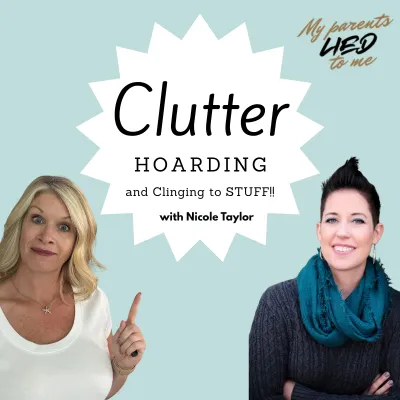
Clutter, Hoarding, and Why Families Hold Onto Too Much
If you’ve ever stood in your parents’ living room, looked around at 40+ years of “collections,” and thought,
“How on earth are we ever going to deal with this?”
…you’re not alone.
In my first My Parents Lied to Me podcast episode, I sat down with professional organizer Nicole Taylor, owner of Taylored to You here in Phoenix. She’s spent the last 15 years helping mostly older adults declutter, downsize, and move—often in the middle of a health crisis or family emergency.
What we talked about hit so close to home that I knew it needed to be a blog on my site, because this is the exact world Your Parent Porter lives in.
The Moment “We’re Fine” Turns Into “We Need Help. Now.”
Nicole shared what she sees over and over again:
One day, everything looks “normal.” Your parents are cooking, driving, living their lives. And then there’s one fall, one health scare, one sudden change—and the entire family is thrown into chaos.
Now it’s not just:
“Where will Mom live?”
“Can Dad stay in the house?”
It’s also:
“Who is going to deal with this house?”
“What do we do with all this stuff?”
“How do we do this when we live in another state?”
By the time many families find Nicole (and by the time many families find me), they’re already in crisis mode, making emotional, expensive decisions on the fly.
Why Our Parents Keep So Much Stuff (And Why It’s Not Just “Hoarding”)
One of the most powerful parts of our conversation was around why older adults hold on to so much.
This isn’t just “they’re messy” or “they’re stubborn.”
It’s generational.
Many baby boomers were raised by parents who lived through the Great Depression or very lean times. The unspoken rule was:
You keep what you’re given.
You don’t waste.
You save “the good stuff” for later.
So they hold onto:
China sets and crystal that aren’t worth what they used to be
Furniture and collectibles from parents and grandparents
Boxes of clothes, knick-knacks, and “maybe it will be valuable someday” items
Nicole calls them “master collectors”—and honestly, that phrase is perfect. These collections often started from a place of pride, security, and love. But decades later, they can quietly become a safety hazard, a health issue, and a massive emotional burden for everyone involved.
Why You May Not Be the Right Person to “Fix It”
Here’s the part adult children hate to admit:
Most of us are not the right person to help our parents declutter.
I watched this play out with my own mom. I begged, I bargained, I tried to make it “fun”:
“Come on, Mom, let’s clean it out together!”
And what I got back was resistance, defensiveness, and sometimes full-on World War III energy.
Nicole had the same experience with her own mom—and she’s a professional organizer.
Why? Because when it’s you standing in their living room, they’re not just seeing boxes and closets. They’re seeing:
The little girl or boy they raised
Old arguments and old roles
Their own aging and loss of control
It’s loaded.
That’s why bringing in a neutral, trusted third party—someone who isn’t emotionally entangled—is often the key. A professional organizer can stand in that gap:
They don’t judge.
They’re not attached to every object.
They can ask, “What do you want your life to look like now?” without all the family baggage.
Clutter Isn’t Just Messy. It’s a Health & Longevity Issue.
I’m a personal growth and wellness junkie—I read all the books, listen to all the experts—and one thing is clear:
Your environment is part of your health.
For aging adults, a cluttered or over-stuffed home isn’t just annoying; it can:
Increase fall risk
Make basic tasks harder and more exhausting
Add constant mental stress
Make it harder to find important documents, medications, or emergency information
If we want our parents (and ourselves) to age well, live longer, and stay independent, decluttering and organizing isn’t cosmetic—it’s preventative care.
The Brave Ones: Older Adults Who Choose to Act Early
One thing Nicole shared that gave me hope:
Some of her clients call before the crisis.
Often they’re women in their early 60s to mid-60s who have:
Lost a spouse
Been through a divorce
Started to notice their health changing
They’ll say:
“I don’t want to end up in an emergency with my life in chaos.”
“I don’t want to dump this on my kids.”
Are they in pain? Sometimes. Are they scared? Often.
But they’re also incredibly strong.
They’re choosing themselves and their future, even when it’s uncomfortable. And that’s something I want more families to know is possible.
How Your Parent Porter Fits Into This
This entire conversation is exactly why I created Your Parent Porter.
There is a huge gap between:
“We’re fine, we’re independent, stop worrying about us.”
and“We’ve fallen, we’re moving, and the kids are flying in tomorrow to figure everything out.”
Your Parent Porter exists in that middle space.
I help:
Adult children who see the red flags but don’t want every visit to turn into a fight about the house.
Independent aging parents who want to stay in their homes, on their own terms—but safely and with less overwhelm.
That can include:
SAFE Home & Wellness Check-Ins
Referrals and warm introductions to pros like Nicole Taylor for organizing and downsizing
A calm, non-judgmental third party to say the hard things with kindness:
“This layout isn’t safe.”
“This clutter is increasing your risk.”
“Let’s make a plan now, not later.”
A Gentle Nudge to Start the Conversation
If you’re reading this and thinking about your mom’s “craft room,” your dad’s garage, or the house you know you’ll be responsible for someday, here’s my invitation:
Don’t wait for the fall. Don’t wait for the health scare. Don’t wait until you’re standing in a packed house with a moving deadline and a broken heart.
Start small. Start with a conversation. Start with a walk-through.
And if you want a neutral, caring partner to help you navigate all of this—that’s exactly what I do.
👉 Learn more about Your Parent Porter’s SAFE Home & Wellness Check-Ins and how we can connect you with trusted local partners like Nicole Taylor to support your family before it’s an emergency.
You don’t have to choose between honoring your parents’ independence and protecting their safety.
You can do both.
We can do it together.
Check out the interview here @yourparentporter
